How to Help Your Child Become a Problem Solver
3 min read
As adults, we’re solving problems every day at home, at work and out running errands. We live in a complex world that is constantly changing, so well-developed problem-solving skills are more important to have than ever before — and they can begin to develop in early childhood. The key is to nurture this skill both at school and at home by engaging your child’s sense of curiosity and wonder and weaving problem-solving challenges into playtime and day-to-day life.
Let Them Take the Lead
Fostering a “can-do” mindset in your child is an important step in their problem-solving journey. You can help build this confidence by letting your little one take the lead when faced with a problem. While it may be tempting to step in when they hit a roadblock, remember that setbacks are an unavoidable part of this process and that your child will build confidence and independence while searching for a solution on their own.
Of course, you don’t want to completely remove yourself from the equation. Instead of stepping in to find a solution, ask leading questions as you structure activities as a problem. For example, instead of telling your child to set the table, ask how many guests are coming and if your child has enough plates, chairs and utensils. Guiding questions like this allow you to provide support without interfering with the problem-solving process.
Use Toys and Games
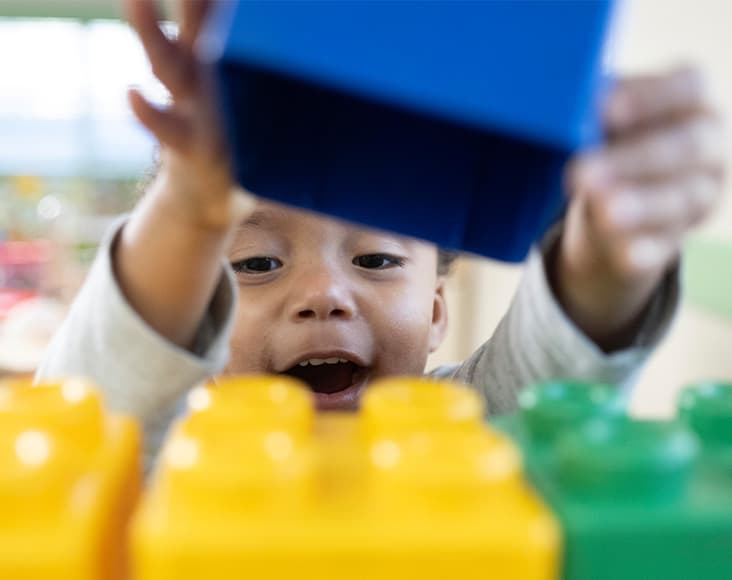
Nurturing problem-solving skills during playtime calls for the right type of toys. Break out the building blocks and encourage your little one to build short and tall towers, make the tallest tower they can or explore how different shaped blocks stack on top of one another.
With age-appropriate puzzles, your child can test out which pieces fit into the spaces and work out a solution to complete it. Puzzles are also a great opportunity for your little one to strengthen their fine motor skills as they grasp and move the pieces.
The Power of Persistence
Practice makes perfect, and that’s especially true when it comes to building problem-solving skills. Encourage your child to take as many chances as they need to find a solution and remind them that trying again is an important part of solving problems. If they start getting frustrated, offer a suggestion but let them decide how they want to move forward.
Invite your child to watch as you fix things around the house or tackle a DIY project. Show them that you don’t always find the solution on the first try and that even grown-ups have to stay persistent as they test different ideas to solve a problem.
How Primrose Teaches Problem-Solving
At Primrose schools, students strengthen their problem-solving skills through the Design Thinking Process embedded in our Balanced Learning® approach. With this three-step process, children:
- define the problem
- think through and test potential solutions and ideas
- share solutions with others and listen to feedback
Design Thinking can then be used to overcome obstacles at school, at home and beyond. Teachers also use the Primrose Friends puppets to role-play situations, allowing the young children to join in and find solutions or different ways to approach a scenario.
Problem solving, like many other skills, requires a lot of practice. Take advantage of your child’s first five years when they are most receptive to learning and help them build the skills that will serve them for the rest of their lives.
To learn more about problem solving, check out:
Design Thinking: How Primrose Teaches Problem Solving – Primrose Schools