How Primrose Schools Balances the Best of Montessori
When it comes to finding the right school for your child, the different options can be overwhelming. After all, there’s no one-size-fits-all approach to early learning, and each program has its own methods, curriculum and classroom environment that you’ll need to consider.
As you research various schools, you may be wondering what sets them apart. Many parents today have heard of Montessori and often ask us how it compares to the Primrose Schools research-informed Balanced Learning® approach.
Discover which qualities these early education approaches share as well as some key differences between them.
What is the Montessori Method?
Many of today’s Montessori schools combine the original system with more modern components, but the Montessori Method refers to a teaching philosophy developed by Italian physician and educator Dr. Maria Montessori. It focuses on independence, hands-on learning and a thoughtfully designed environment which, together, help build a foundation that prepares children for the real world. Montessori has informed much of what we know about early childhood education and has been a popular teaching philosophy for more than 100 years.
What is the Primrose Balanced Learning® Approach?
Exclusive to Primrose Schools, Balanced Learning® is a comprehensive, time-tested approach that blends the best early education wisdom — including that from Dr. Montessori — with modern learning science. It balances purposeful play with nurturing guidance from teachers to encourage curiosity, creativity, confidence and compassion.

What is the Difference between the Montessori Method and the Primrose Balanced Learning approach?
The Role of Teachers
While Primrose and Montessori schools share much in common when it comes to how children learn best, they differ when it comes to the role teachers play in the classroom.
Montessori teachers primarily take on the role of an observer, monitoring the development of each child to understand their needs. They may redirect when they feel a child needs support or notice an opportunity to introduce new learning.
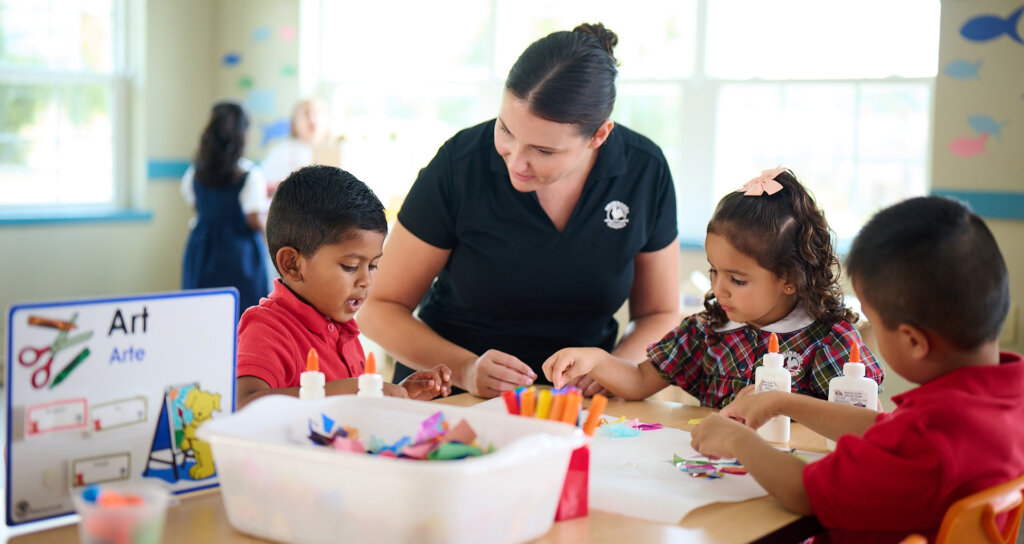
In Primrose classrooms, teachers focus on developing relationships with children and facilitating both child-led inquiry and direct instruction. They introduce new ideas, ask questions and teach lessons in both individual and group settings. The Balanced Learning approach is built on the belief that young children learn best through integrated learning experiences, so instead of focusing on one subject at a time, teachers weave multiple subjects into a single lesson.
The Learning Environment
Both Primrose and Montessori classrooms offer a variety of books, equipment and resources for children to enjoy, but their daily routines and experiences differ.
Montessori
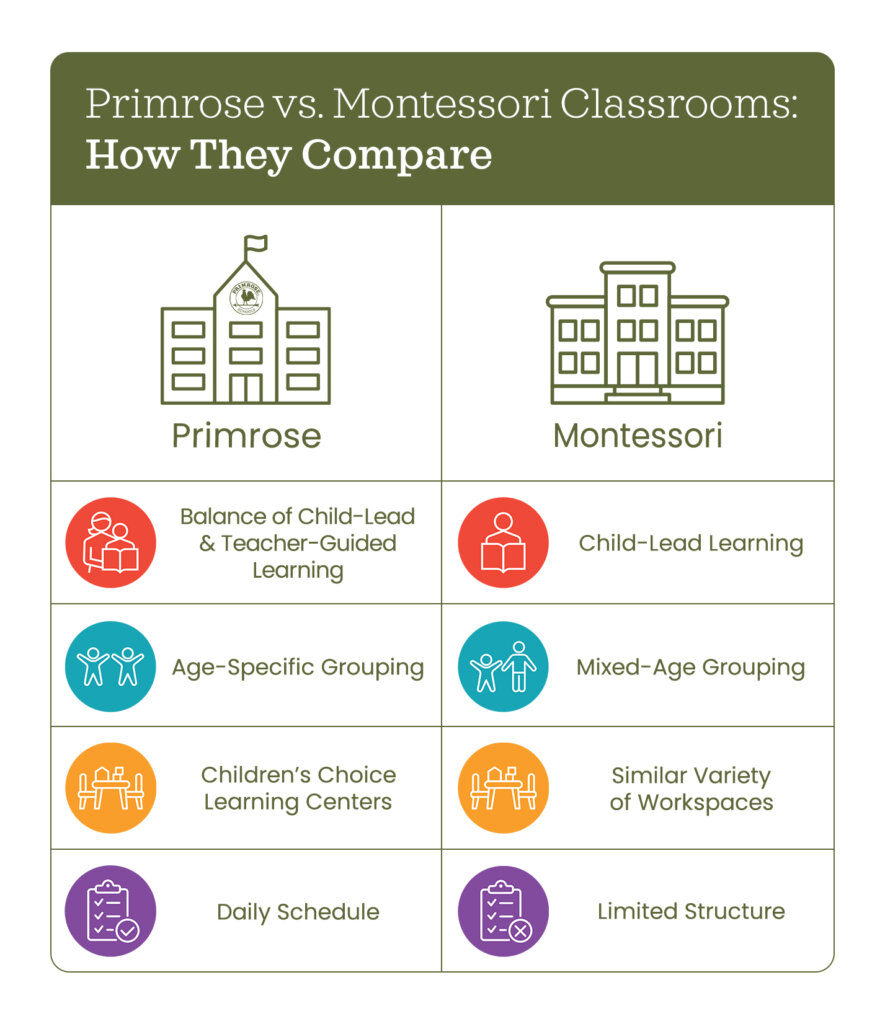
Mixed-Age Grouping: Mixed-age classrooms are a unique part of Montessori schools. Children can observe and learn from the different stages and varied abilities of their peers. This integrated approach can help children appreciate their own achievements so they can learn at their own pace and recognize their unique strengths and needs.
Workspaces: Montessori classrooms typically offer a variety of workspaces with purposefully designed materials. Children are free to explore the activity of their choosing to build skills and think creatively. Teachers introduce new items and support when needed, but children mainly follow hands-on, self-directed learning individually or within small groups.
Limited Structure: There is no daily schedule in most Montessori classrooms. This is intended to foster independence, self-discipline and social skills as foundations for traditional “academic” disciplines.
Primrose
Age-Specific Grouping: While Montessori classrooms combine various ages, Primrose students are grouped into age-specific classrooms with a curriculum that fosters developmentally-appropriate experiences for a thoughtful learning journey.
Workspaces: Like Montessori, Primrose classrooms are intentionally designed for age-appropriate discovery and exploration. For example, in Children’s Choice Learning Centers, children are free to explore areas like the Dramatic Play Center and the Writing Center that are enhanced for optimal purposeful play and learning.
Daily Schedule: The Balanced Learning approach acknowledges that children thrive on routine. Every classroom follows a consistent daily schedule, helping children feel secure and confident knowing what to expect throughout the day.
When considering what option is best for your family and child, use this snapshot for quick reference:
Every child is unique, and so is the way they learn. We encourage parents to consider the style that feels best for their child. To learn more about how the Primrose Schools Balanced Learning approach meets children’s individual needs and opportunities, visit: